The 2026 Nepal Floods: Policy recommendations to strengthen civil society capacities
The 2026 Nepal floods stood as reminder on the critical role of civil society and the need to systematically build its capacity. Pre-existing humanitarian partnerships, community-based monitoring and youth-led technical initiatives came in as a timely response. At the same time, Nepal and the global community saw the limitations of depending primarily on formal early-warning infrastructure especially in a region that is vulnerable to cross-border hazards. In this context, conscious efforts on strengthening civil society between disasters stands necessary. Post-disaster reflections also point us to the need for deeper integration of community knowledge into early-warning systems, and institutional mechanisms for youth to contribute their technical skills to disaster management. Equally important is the exercise of ‘Futures literacy’ i.e. preparing for multiple possible future risks instead of simply responding to the last disaster. Drawing on the 2026 response, the recommendations below outline how Nepal can build a more organised, technically capable and forward-looking civil society that complements public institutions and strengthens community resilience.
1. Invest in civil-society capacity between disasters.
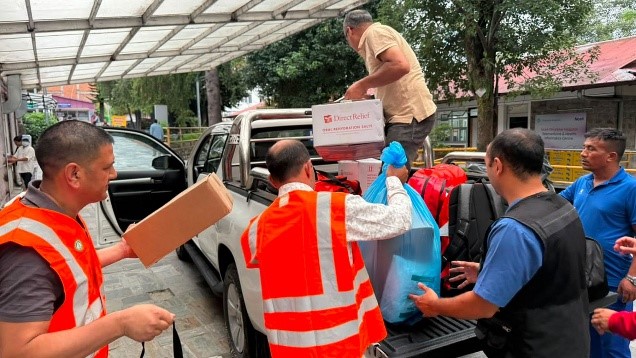
Nepal’s experience shows that the organisations able to respond quickly in 2026 were often those whose capacities and partnerships had been built before the disaster. For example, Dhulikhel Hospital’s (an independent, not for profit hospital) response to the 2026 floods was supported by a long-standing partnership with Direct Relief and pre-positioned medical supplies. When the floods struck, the hospital was able to deploy medical staff with emergency supplies to affected communities. Direct Relief notes that several of its Nepal partners responding to the 2026 floods had also been partners during the 2015 earthquake, reflecting how relationships developed during one disaster can become preparedness infrastructure for the next.
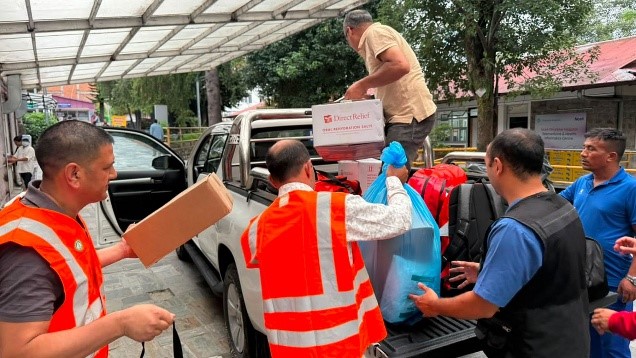
Source: Direct Relief
These examples suggest that Nepal should invest between disasters in sustained youth networks, technical organisations, community groups and humanitarian partnerships. Regular simulations, training and preparedness exercises can then build on these existing capacities. This would allow civil society to move from being mobilised after a disaster to maintaining capabilities, relationships and resources that can be activated when one occurs.
2. Strengthen civil society's capacity to participate in layered early-warning systems.
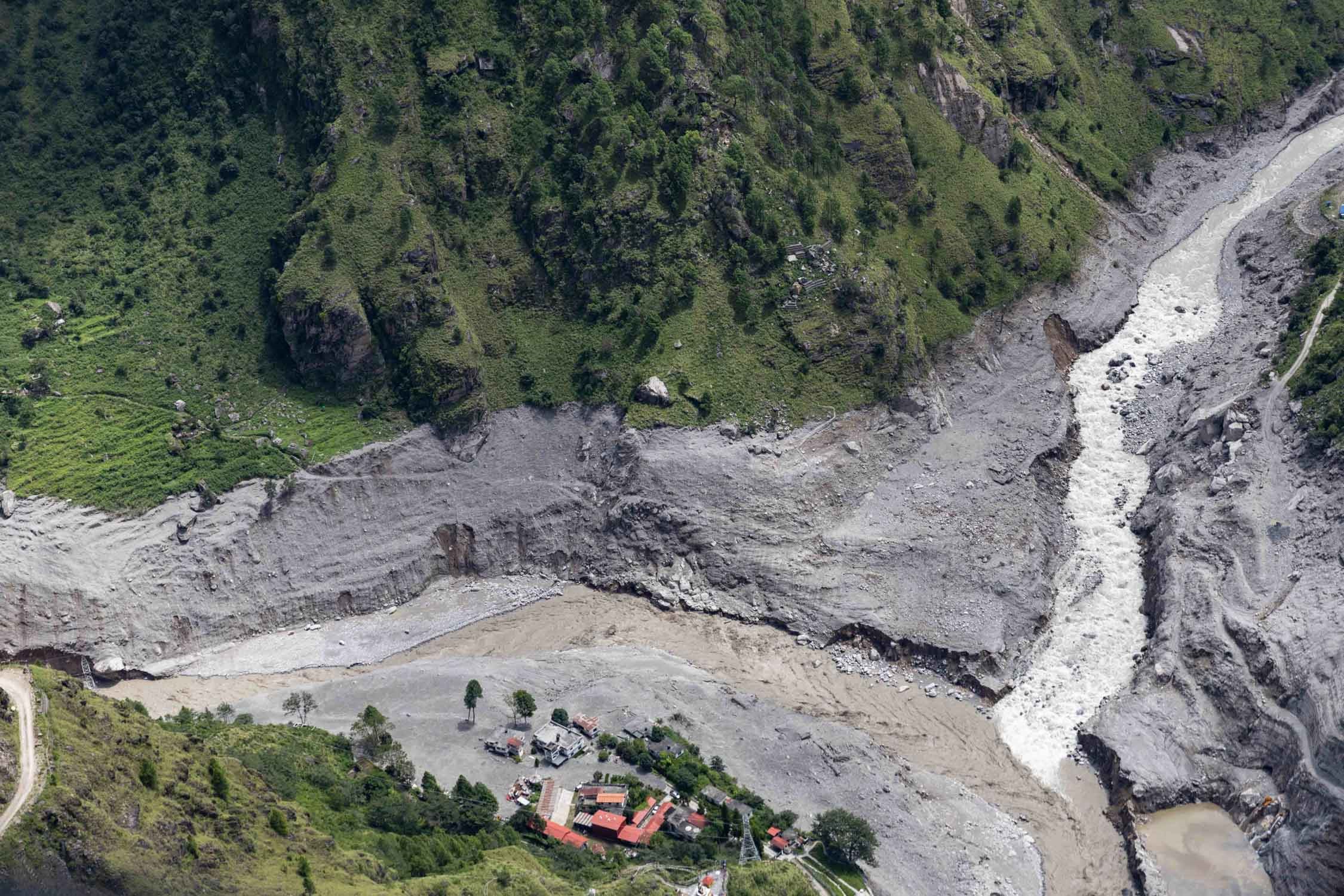
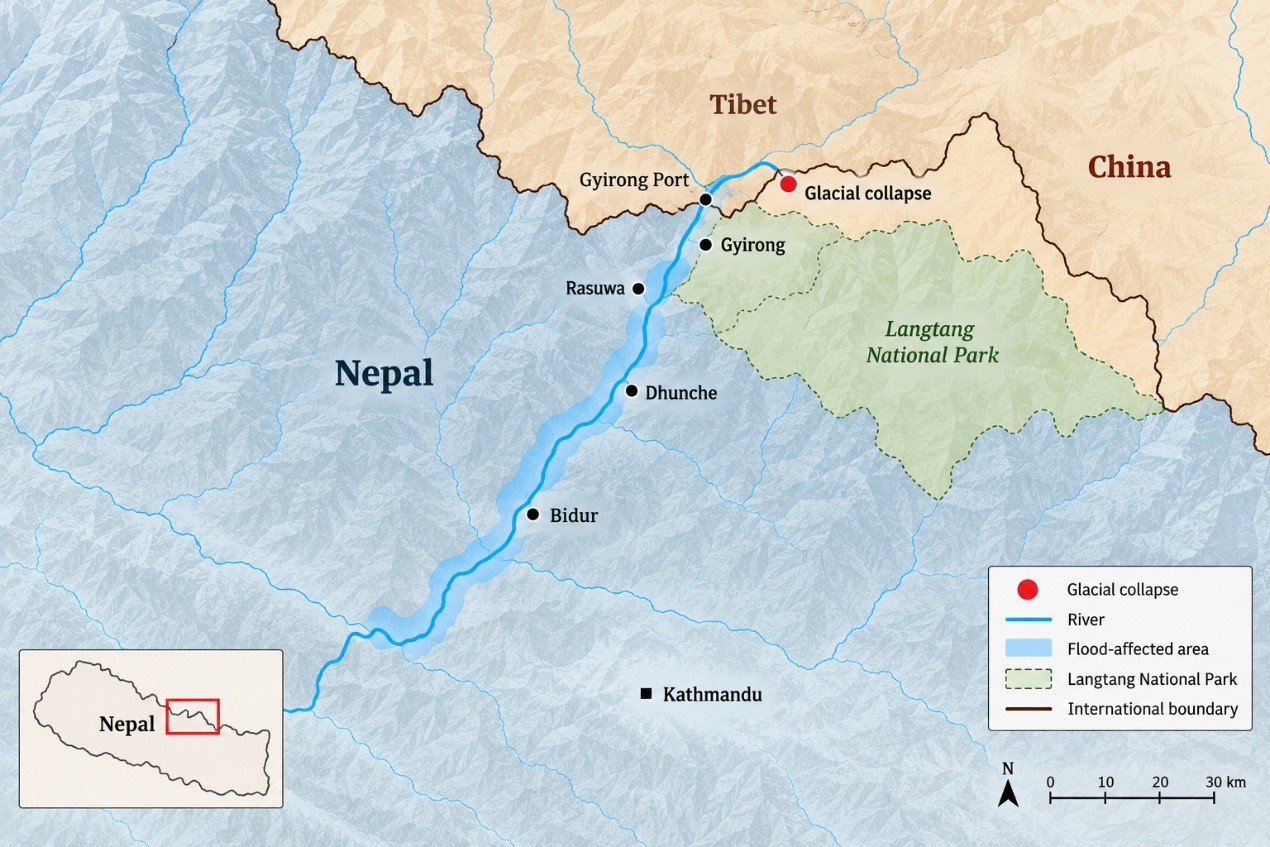
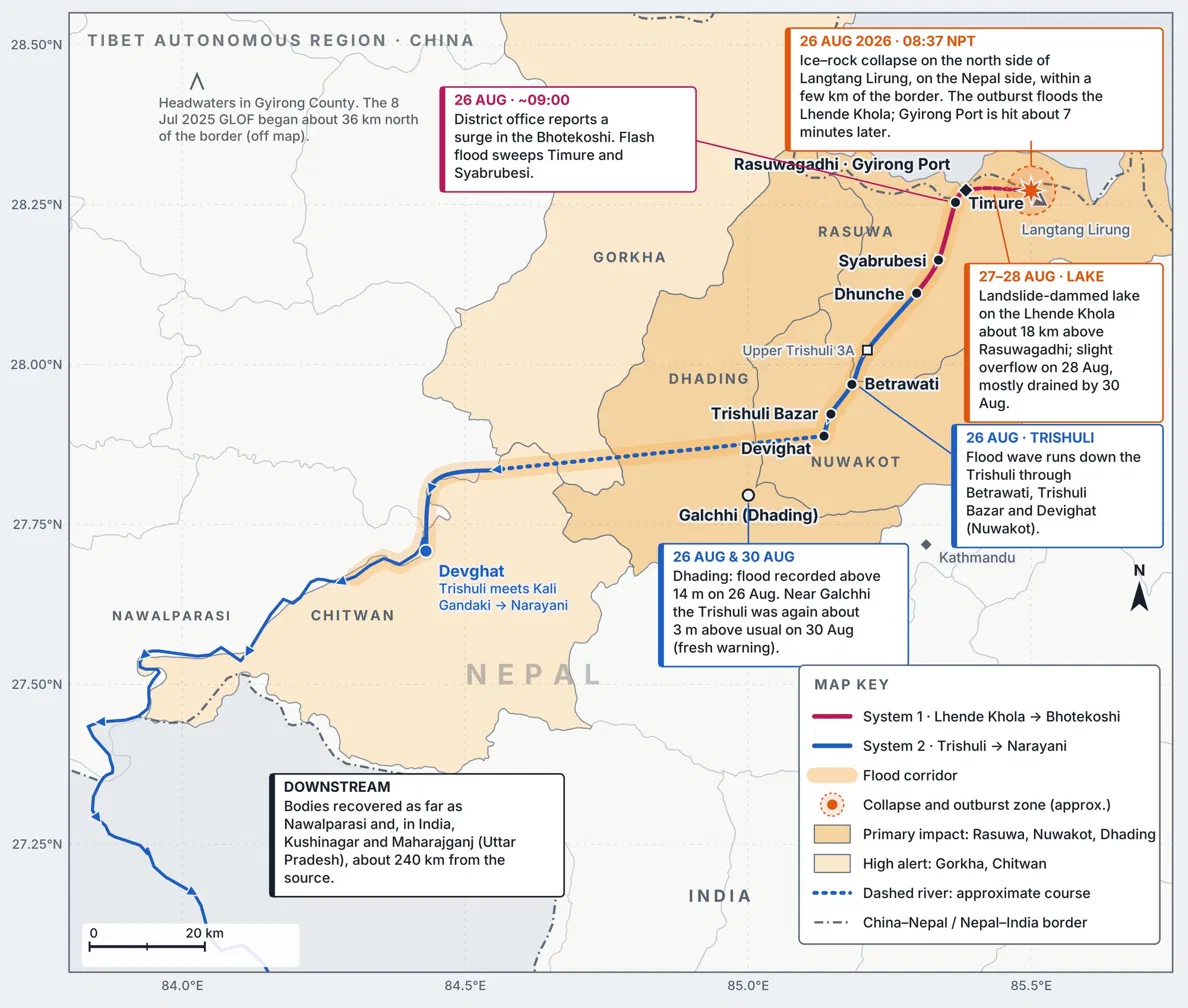
The 2026 disaster originated entirely on the Tibetan side of the border, outside Nepal's monitoring network. However, more than 600,000 SMS alerts were issued by National authorities to downstream residents within 10 minutes of receiving confirmation. The deeper challenge here is that data does not reach as hazards such as glacial lake outburst floods (GLOFs) can originate outside any single country's instruments. In this context, the World Economic Forum highlights the need for a binding, cross-border data-sharing.
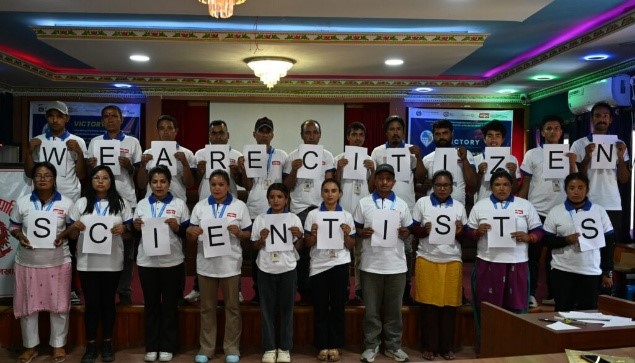
Citizen Scientists of the VICTORY project
Source: S4W-Nepal
Civil society can complement such systems by providing hyper-local information that formal monitoring networks may not be able to capture in such terrains. The Institute of Himalayan Risk Reduction has attempted to address this gap through community-based, citizen-science monitoring. Its VICTORY project capacitates residents of Nepal's hazard-prone Bardiya and Dolakha municipalities to document signals that often precede a hazard such as rising cloudiness in the water, unusual river sounds and shifting slopes. Scaling such initiatives across the region would allow hyper-local data to feed into early-warning systems. In addition, communities trained this way will be self-equipped to assess a disaster and organize an evacuation based on local knowledge even if mechanisms fail. Nepal should therefore invest in training, community-based monitoring and technical partnerships that equip CSOs to function as an active layer within the early-warning ecosystem.
3. Institutionalize the youth response
Source: The Kathmandu Post
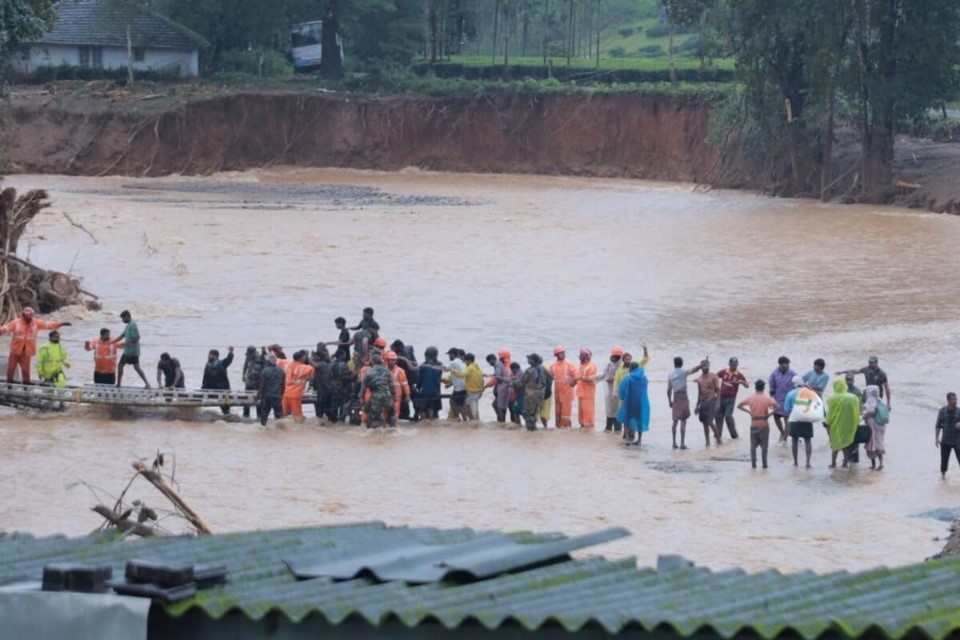
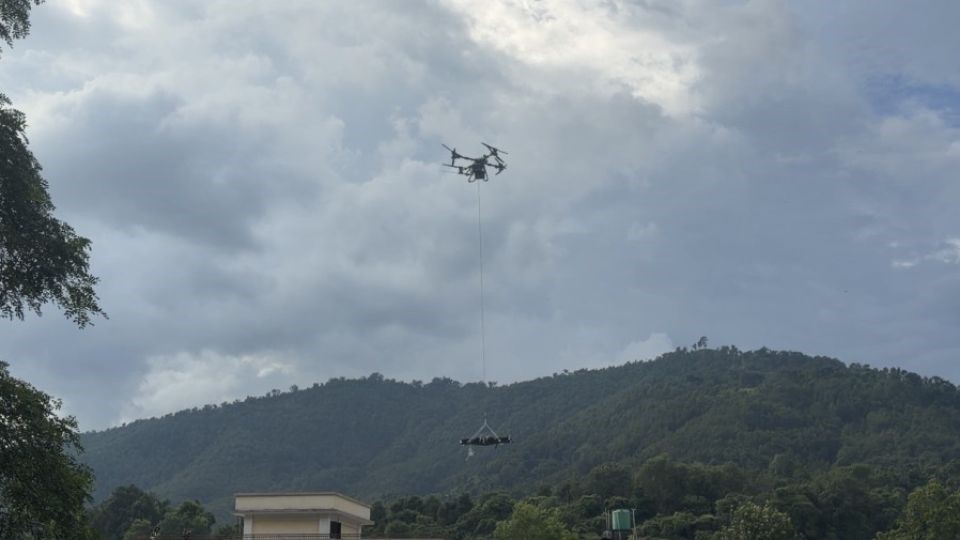
The 2026 flood response shows that young people can contribute far beyond conventional volunteering, with youth undertaking drone operations, mapping, engineering, geospatial work and humanitarian data collection during the response. Nepal can build on these capacities by developing trained pools of youth responders connected to local authorities and disaster-management institutions. This would turn the technical capabilities shown by youth during the 2026 floods into a more sustained civil-society disaster-response resource.
4. Build civil society’s ‘Futures Literacy’ to improve anticipation and resilience.
Developed by UNESCO, Futures Literacy approach enables communities to imagine and prepare for multiple possible futures instead of simply responding to the last crisis. The WEF has identified futures literacy as one of the core skills required at a period of rapid, compounding global change. For Nepal and the wider Himalayan region, this could involve regular scenario-planning exercises with CSOs, community leaders and local authorities around risks such as faster glacier melt, more frequent GLOFs and the potential relocation of at-risk settlements. Strengthening civil society’s futures literacy would therefore enable organisations and communities to anticipate future risks, take part in long-term planning and prepare for scenarios that may differ significantly from past disasters.
References
“4 lessons from young people on the frontlines of the Nepal-Tibet floods,” World Economic Forum, 24 September 2026
Debdutta Chakraborty, “Nepal civil activists criticise Balen govt’s handling of floods, say local govt bodies sidelined,” The Print, 02 September 2026
“Asia Bulletin newsletter: Lessons from the flash flood in Nepal,” The Economist, 01 September 2026
About the author
Preetha Renganarayanan is a Research Assistant at the National Institute of Advanced Studies, Bengaluru.