The 2026 Nepal Floods: The Civil society responses, Lessons learned, and Challenges ahead
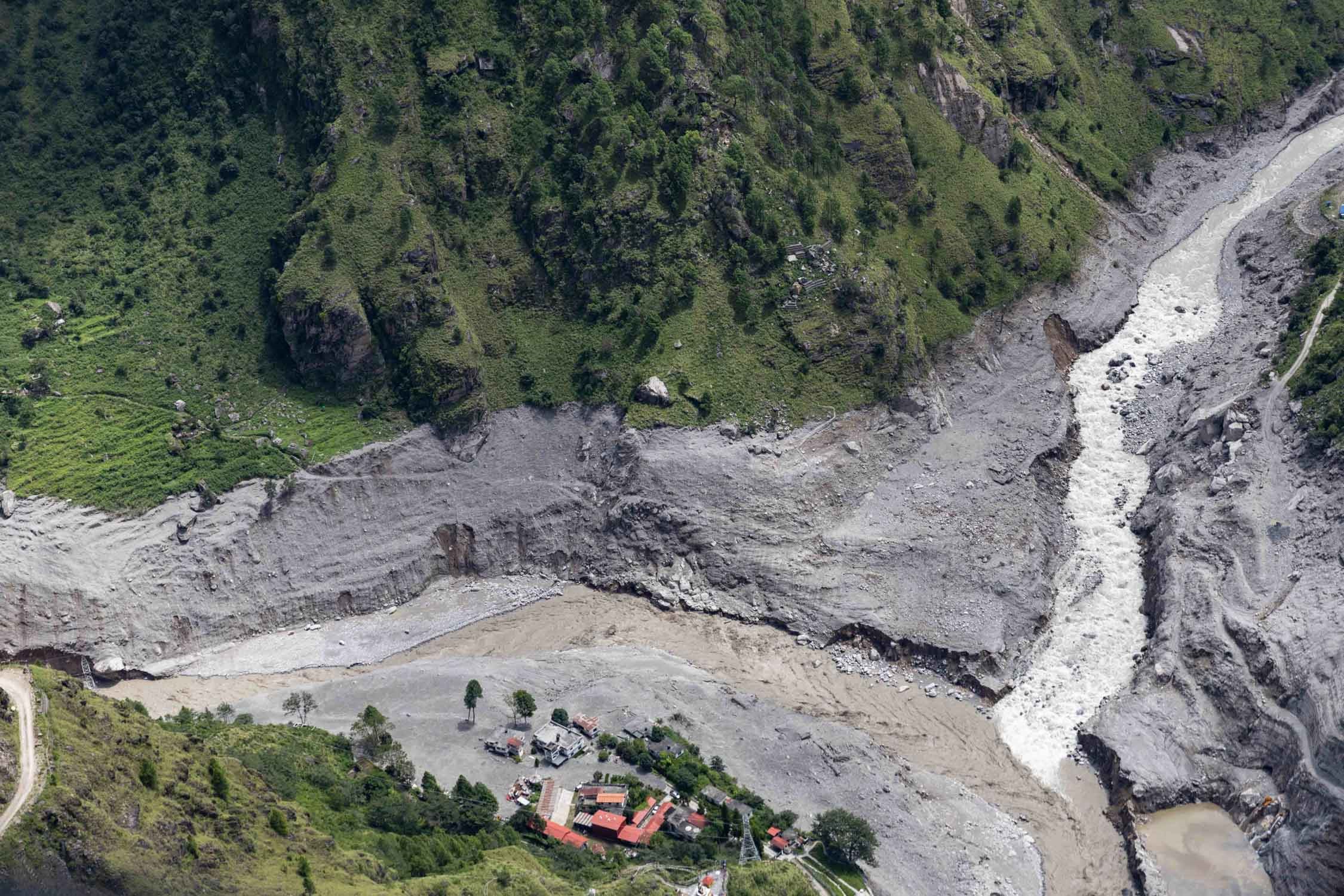
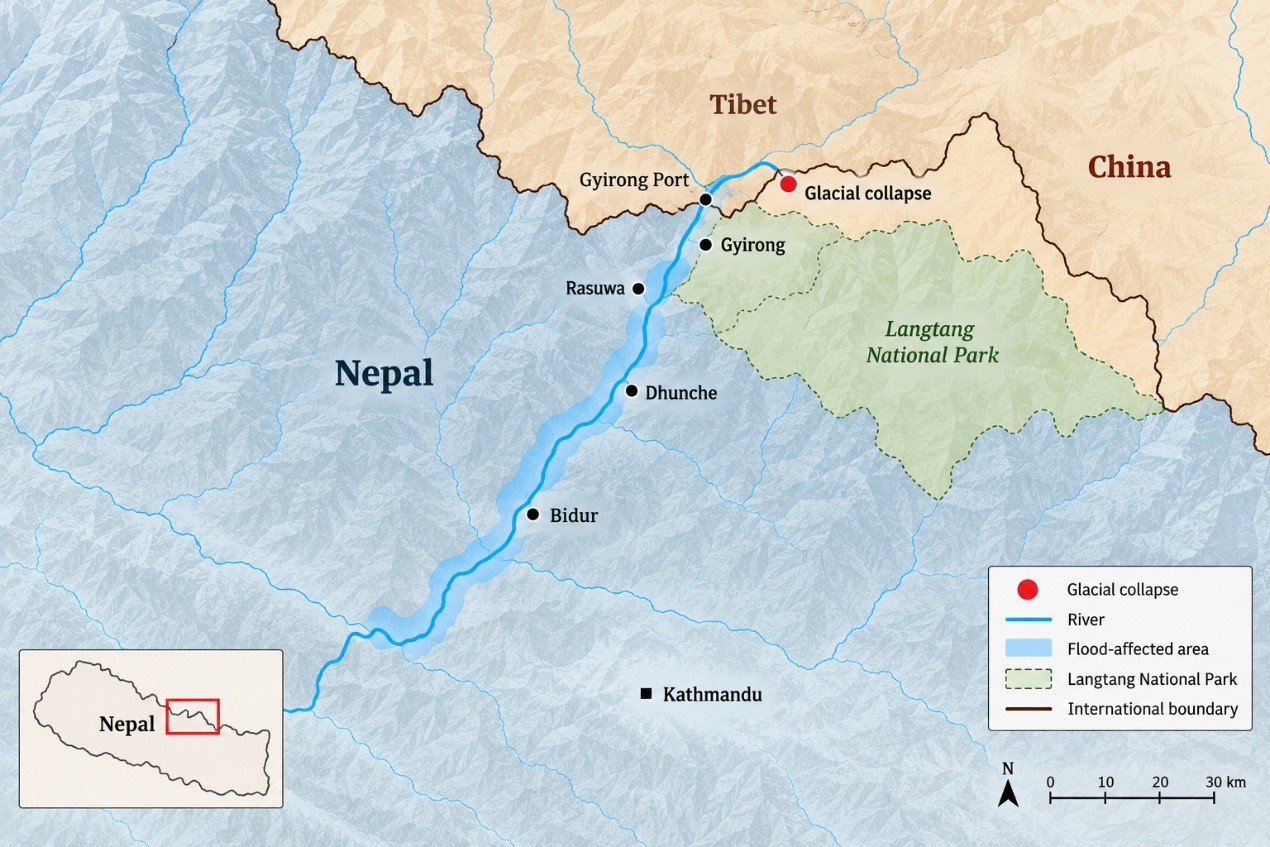
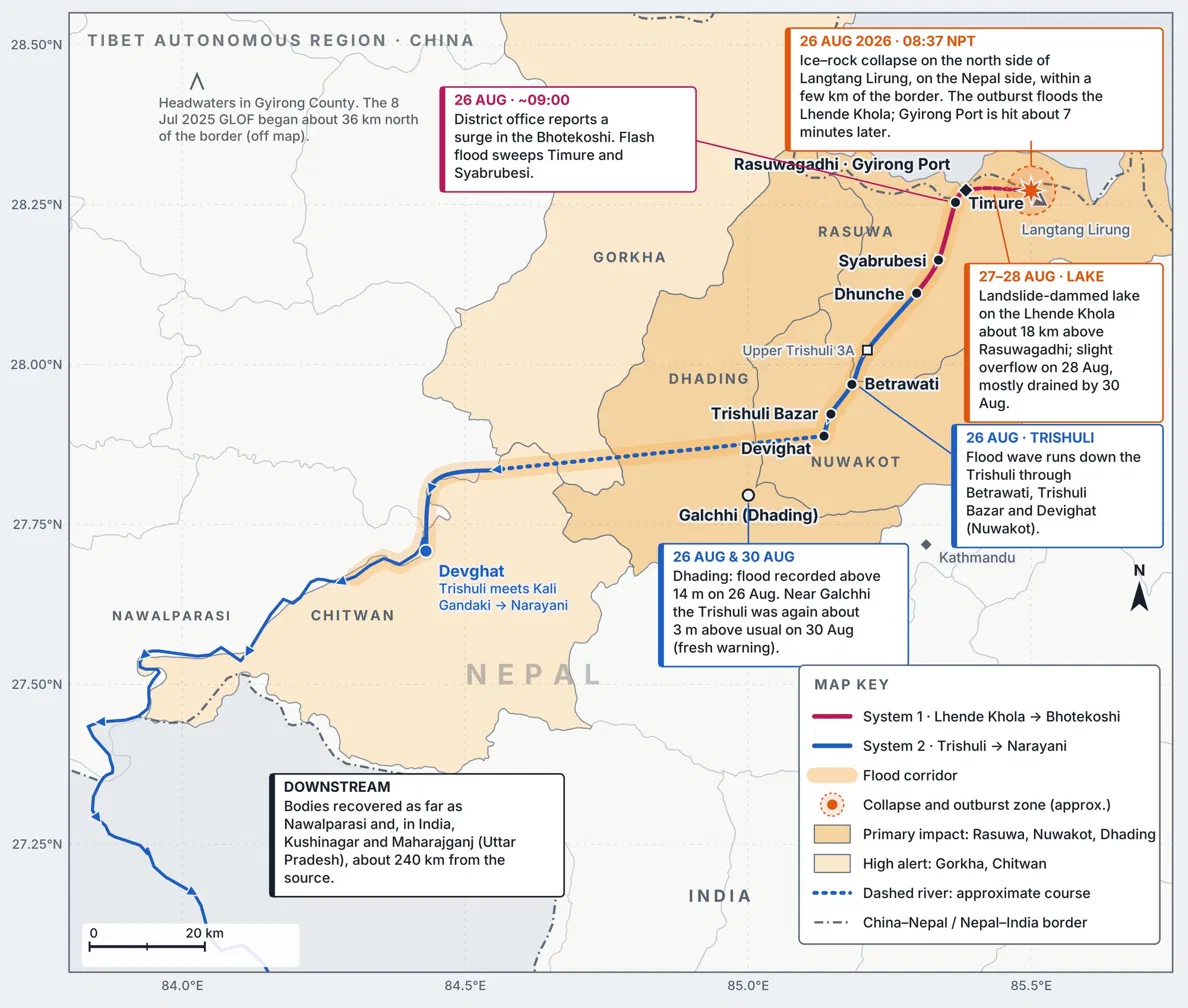
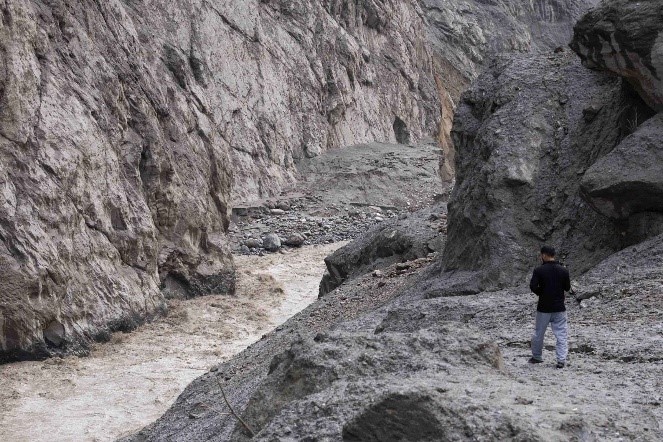
On 26 August 2026, an ice-and-rock avalanche on the Nepal-China border triggered a sudden flood that crossed into Nepal within minutes, devastating parts of Rasuwa, Nuwakot and Dhading. By early September, more than 1,300 people had been confirmed dead and more than 5,000 remained missing. The flood destroyed roads, bridges, communications and local government infrastructure, with communities, volunteers and civil society organisations becoming important sources of assistance and information. Nepal’s experience following the 2015 earthquake provides an important reference point here, where civil society played a significant role across rescue, relief and recovery. Against this backdrop, the note examines the role of civil society in Nepal’s disaster response, lessons from previous disasters, immediate challenges, followed by measures to strengthen civil society’s role in Nepal’s disaster-management ecosystem.
What role does civil society play in Nepal’s disaster response?
First, civil society bridges the operational gaps when formal systems are stretched thin.
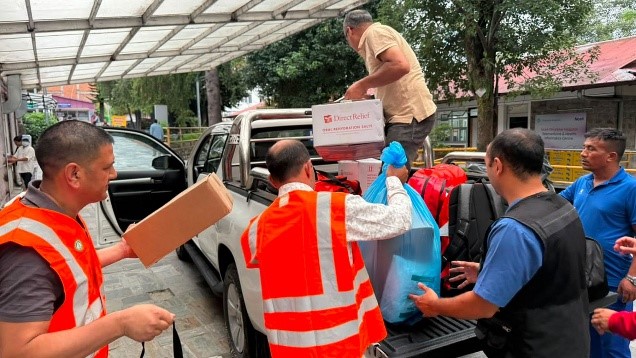
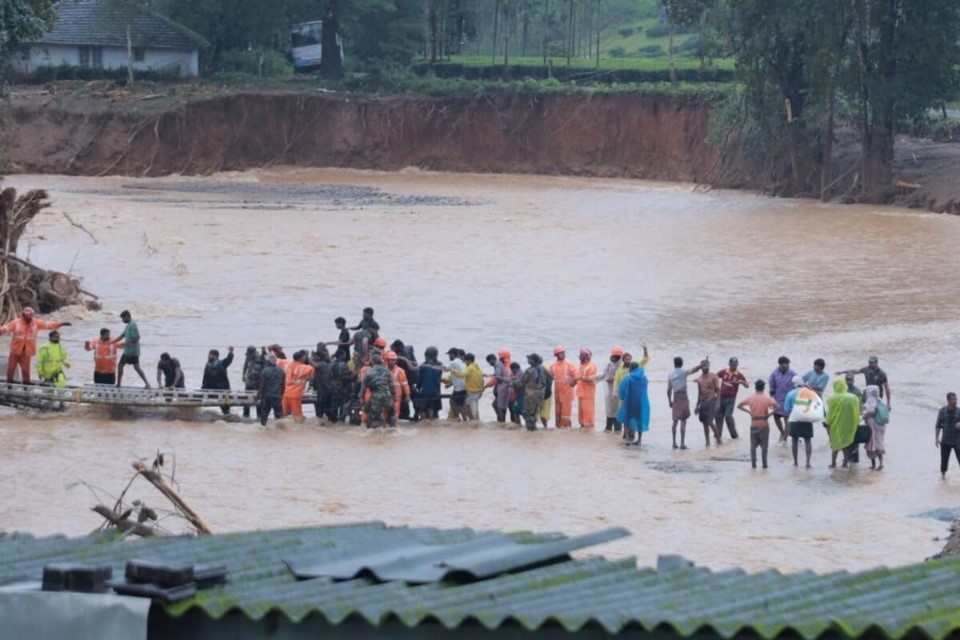
The 2015 earthquake showed that civil society organisations (CSOs) could work across the disaster cycle, from search and rescue to recovery and resilience-building. In a 2016 report, the European Institute for Asian Studies stated that domestic CSOs proved valuable as they connected national policies with local implementation. For example, the Nepal Red Cross Society (NRCS) coordinated with government authorities to provide healthcare, shelter and household supplies and later supported cash distribution and livelihood restoration. The 2015 incident also showed how the domestic civil society’s embeddedness within international networks came in handy. For example, the Global Facility for Disaster Reduction and Recovery (GFDRR) and the Global Network of Civil Society Organisations for Disaster Reduction (GNDR) proved meaningful in coordinating and channelling donations to Nepalese CSOs. The 2026 flood response shows how this role has expanded. Young volunteers supported clean-water distribution, food supply chains and displacement camps whereas the Nepal Army, Nepal Police and Armed Police Force undertook major rescue operations. Civil society was therefore operating along with the state, extending the reach of formal response mechanisms to affected communities.
Second, domestic CSOs provide local knowledge and insights that broader response systems may overlook.
The 2015 earthquake experience showed the consequences when local knowledge is not integrated into a large humanitarian response. Post-disaster assessment reports highlight how poor communication between domestic and international organisations contributed to duplication in certain remote areas and under-distribution in others following the 2015 incident. In places, international medical teams were insufficiently briefed about local conditions. It is in bridging this gap between large-scale response and on ground needs that civil society’s role becomes more important. This stands particularly relevant in a geographically difficult disaster such as the 2026 floods. Studies consequently argue that recovery should follow a people-based approach relying on local skills and expertise, with continuous engagement with affected communities.
Third, the role of civil society is growing beyond manpower to provide specialised technical capabilities.
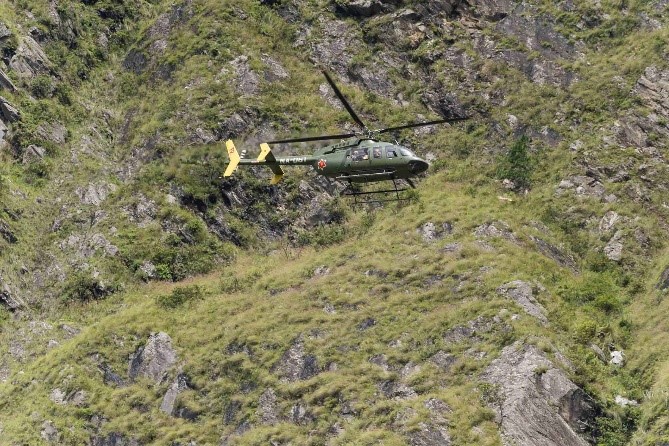
The 2026 floods show this most clearly. Young people from Nepal’s Drone Association and Geovation Nepal used LiDAR i.e. light detection and ranging to measure debris depth and thermal-imaging drones to search hillsides, caves and flooded tunnels that conventional rescue teams could not safely enter. Hami Nepal developed a drone team along with the police and army, whereas young engineers and geomatics students contributed to humanitarian mapping through a Humanitarian OpenStreetMap Team (HOT) Tasking Manager. The World Economic Forum's (WEF) 2026 assessment highlights that such youth networks should be viewed as a technical resource in disaster planning, and not be limited as volunteers to be mobilised only as crisis strikes.
 |
 |
|
| Source: The Kathmandu Post | ||
Fourth, civil society plays a key last-mile role in connecting early warning and community action.
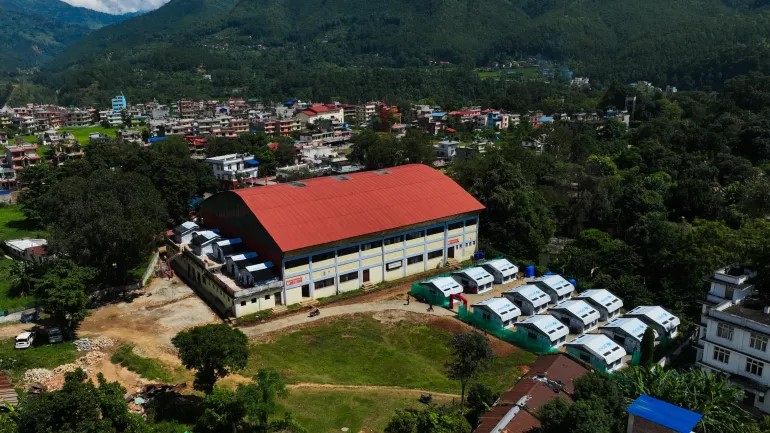
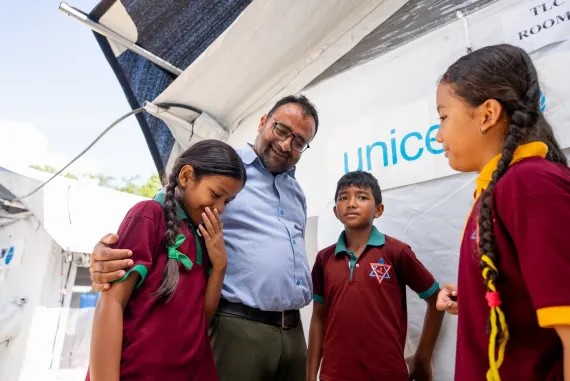
The evacuation of students at Tribhuvan Trishuli Secondary School during the 2026 floods stands as a good example for this. The case reflects the importance of community-based warning networks along with formal systems. As per several media reports, at around 09:10 AM, Rajendra Dawadi, the head teacher of the school received calls from community members warning of an approaching flood and moved roughly 900 students and 16 staff to higher ground. About ten minutes later, floodwaters struck the school, burying the compound under debris. The warning reached the school through community relationships rather than Nepal’s formal sensor-and-SMS system. The incident shows that the effectiveness of an early-warning system depends not only on detecting a hazard but also on whether warnings reach trusted local actors who can act on them. In line with this, the WEF notes that technology can detect hazards, but communities require trusted people and local systems to interpret warnings and channel them into timely action. Civil society therefore plays a critical last-mile role in connecting formal early-warning infrastructure with community-level preparedness and evacuation.
 |
 |
|
|
Rajendra Dawadi with his students at a UNICEF-supported temporary learning centre at Tribhuvan Trishuli Secondary School in Nuwakot. Source: UNICEF |
||
What have Nepal's previous disasters taught about civil-society-led rescue, relief and rehabilitation?
First, voluntarism is an important national resource but it needs to be organised before disaster sets foot.
The 2015 earthquake showed a strong culture of voluntarism with citizens supporting search-and-rescue teams and relief distribution. The 2026 flood response again brought out the capacity of young people and community volunteers to mobilise rapidly. Youth were not simply restricted to carrying relief supplies, they contributed drone-based search, debris assessment and humanitarian mapping. The lesson here is that Nepal not only has a strong volunteer base, but this capacity can become a formal disaster-response asset when supported by training, networks and technology.
Second, civil society can make recovery more responsive through community knowledge and engagement.
The 2015 report by Asian Development Bank on “Response to Nepal's Earthquake: Ten Lessons from Evaluations,” charts out the importance of affected communities’ participation in the recovery process. It draws on from Aceh-Nias, the joint recovery and reconstruction region in Indonesia, following the 2004 Indian Ocean tsunami. Local communities participated in designing social-housing standards that reflected local culture and traditions. The report notes that such participation can produce lower-cost and more sustainable solutions. Nepal’s own 2015 earthquake reconstruction experience reinforces this point wherein local involvement helped make housing designs more responsive to cultural and community needs. For civil society, this points to a role in bringing community knowledge, preferences and concerns into recovery planning and design. This matters for Nepal in 2026 because the disaster has altered physical landscapes. With agricultural land buried and settlements and livelihoods having to be relocated, decisions cannot be based only on engineering assessments. Land, livelihoods, social networks and cultural relationships all become part of the recovery question.
Third, civil society can strengthen recovery through monitoring, feedback and course correction.
Nepal’s experience after the 2015 earthquake shows that civil society’s contribution extends well beyond immediate relief. Nearly 200 plus International and national NGOs and community-based organisations supported 412 reconstruction projects covering housing, schools, health institutions, livelihoods, heritage, water and irrigation. The scale of reconstruction also showed the importance of mechanisms that could identify gaps and adjust programmes. The Nepal Reconstruction Authority received 634,973 complaints concerning housing-grant eligibility, of which 27.4 per cent were subsequently added to the beneficiary list after re-surveys and verification. For the 2026 floods, this experience underlines the importance of civil society mechanisms that can gather community feedback, identify exclusion, correct errors and improve the delivery of recovery programmes.
What are the immediate challenges facing civil society during the 2026 floods?
First, the institutions closest to communities have themselves become casualties.
Under Nepal's federal framework, local governments are the primary line of disaster response. The Local Government Operation Act 2017 gives local governments responsibilities across the disaster cycle, whereas the Disaster Risk Reduction and Management Act 2017 established the National Disaster Risk Reduction and Management Authority (NDRRMA) and structures for coordination across levels of government. The floods, however, destroyed the institutions responsible for that task. In Gosaikunda Rural Municipality, the vice-chair, two ward chairpersons and several employees went missing, and the municipal office was washed away. Its chairman reported that seven members of his own family were missing. In Uttargaya, the municipal office was washed away along with its records. Roads, power and telephone networks failed, leaving officials unable to collect data or coordinate. The scale of this institutional vulnerability is reflected in a 2022 Emergency Preparedness and Response Assessment by the NDRRMA wherein Nepal's emergency response system scored only 39.8 per cent, and local units were assessed as considerably weak. As Anil Pokhrel, former executive chief of the NDRRMA, puts it: “The local level’s capacity is even weaker; it completely lacks the capability to withstand a flood like the one in Rasuwa.”
Second, the centralisation of relief has created a tension between coordination and civic participation.
The government implemented a one-door system through which aid was directed to the Prime Minister’s Disaster Relief Fund and unauthorised fundraising was halted. Such a system can provide a mechanism for consolidating resources and avoiding duplication. Indeed, the 2015 EIAS report records the rationale behind Nepal’s one-window approach as consolidating donations and seeking more equitable distribution. However, civil-society activists in 2026 have argued that centralisation delayed distribution and restricted the participation of elected local governments, civil society organisations and citizens. They have specifically criticised the one-door system as ineffective and called for broader participation. The immediate challenge therefore is reaching a middle ground. It could involve combining central oversight with decentralised implementation, so that accountability and coordination do not obstruct assistance from reaching communities at the earliest.
Third, the destruction of communication infrastructure is curbing civil society’s ability to reach and identify affected communities.
The 2026 floods disrupted the very communication networks on which civil-society response depends. In the affected districts, 83 Nepal Telecom mobile towers and 27 Ncell sites were damaged, whereas more than 60 kilometres of optical fibre at Timure were washed away. The consequences were visible on the ground with local authorities struggling to establish the whereabouts of missing people, while humanitarian organisations reported that damaged roads, bridges and communications had left some communities cut off from assistance. In Uttargaya Rural Municipality, officials reported being unable to contact residents or establish reliable information on more than 1,000 people who were initially unaccounted for. The challenge therefore is maintaining reliable two-way communication through which civil society can identify needs and connect them to response mechanisms.
References
“4 lessons from young people on the frontlines of the Nepal-Tibet floods,” World Economic Forum, 24 September 2026
“Response to Nepal's Earthquake: Ten Lessons from Evaluations,” Asian Development Bank, 29 April 2015
“The Crisis Response to the Nepal Earthquake: Lessons Learned,” European Institute for Asian Studies, May 2016
“A Decade Later: Lessons from Nepal’s Earthquake Response,” The Asia Foundation, 24 April 2025
“Asia Bulletin newsletter: Lessons from the flash flood in Nepal,” The Economist, 01 September 2026
Bhisma K. Bhusal, “Responding to a mega earthquake: Lessons from the 2015 Gorkha Earthquake, Nepal,” VoxDev
“How 2015 Earthquake Lessons Guide Response to Nepal’s Recent Himalayan Tsunami,” reliefweb, 16 September 2026
“What 13 minutes in Nepal can teach us about acting before disaster strikes,” The New Humanitarian, 09 September 2026
“Floods wipe out local governments’ ability to lead rescue, relief,” The Kathmandu Post, 29 August 2026
Bidhya Rai, “Disaster strikes, local governments left without the means to respond,” Nepal News, 30 August 2026
“Nepal’s Disaster Response System, Explained,” Nepal Economic Forum, 09 September 2026
“Bhotekoshi floods expose gaps in Nepal’s emergency communications,” The Kathmandu Post, 07 October 2026
Debdutta Chakraborty, “Nepal civil activists criticise Balen govt’s handling of floods, say local govt bodies sidelined,” The Print, 02 September 2026
“Disaster Management in Nepal: Current Practices and Opportunities,” Harvard Humanitarian Initiative, 25 September 2023
About the author
Preetha Renganarayanan is a Research Assistant at the National Institute of Advanced Studies, Bengaluru.