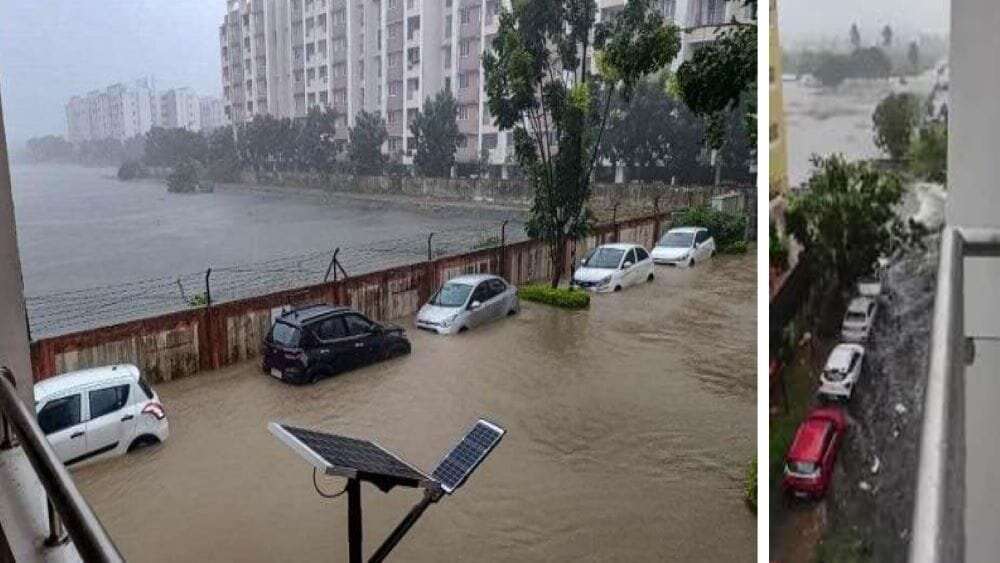
The 2026 Nepal Floods: The Gyirong Glacier, Vulnerabilities along China-Nepal border in the Himalayas, and the Crisis response
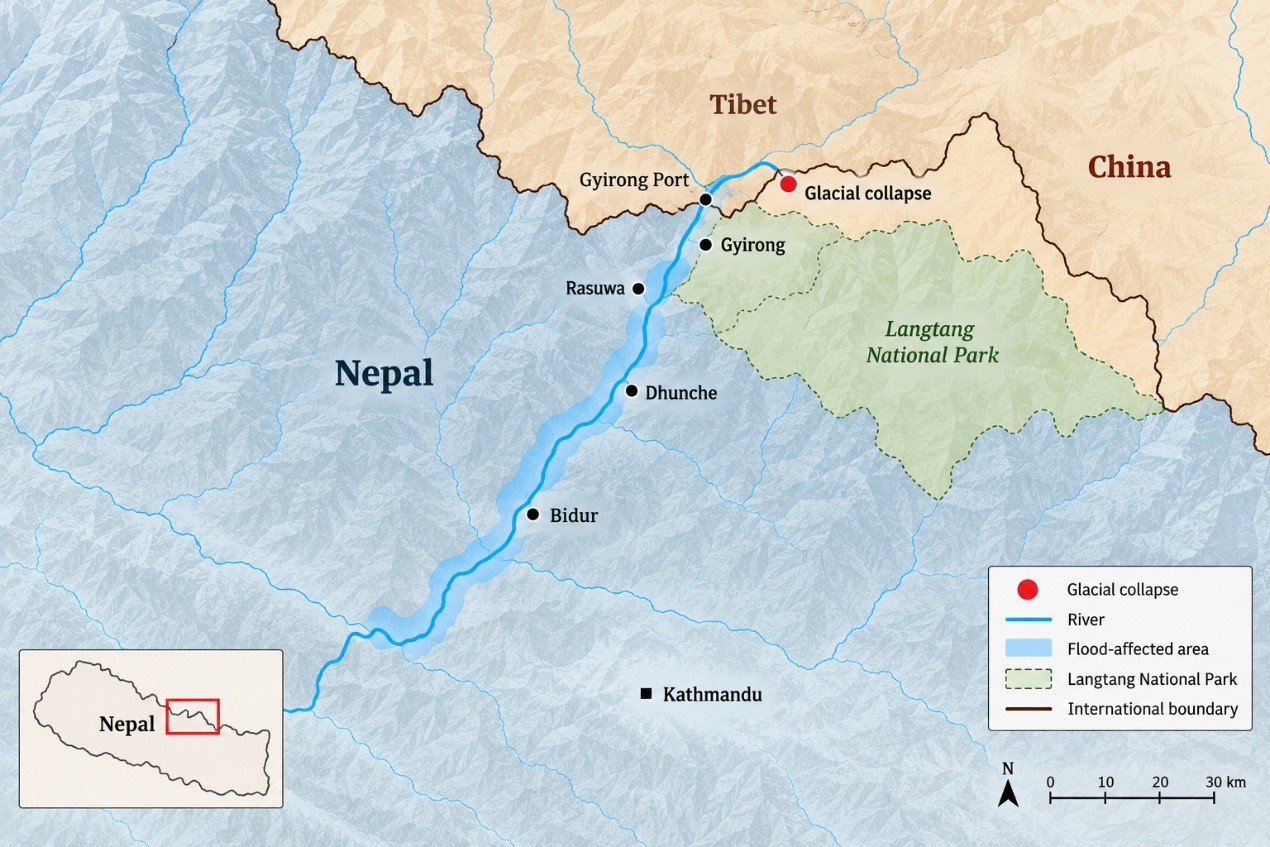
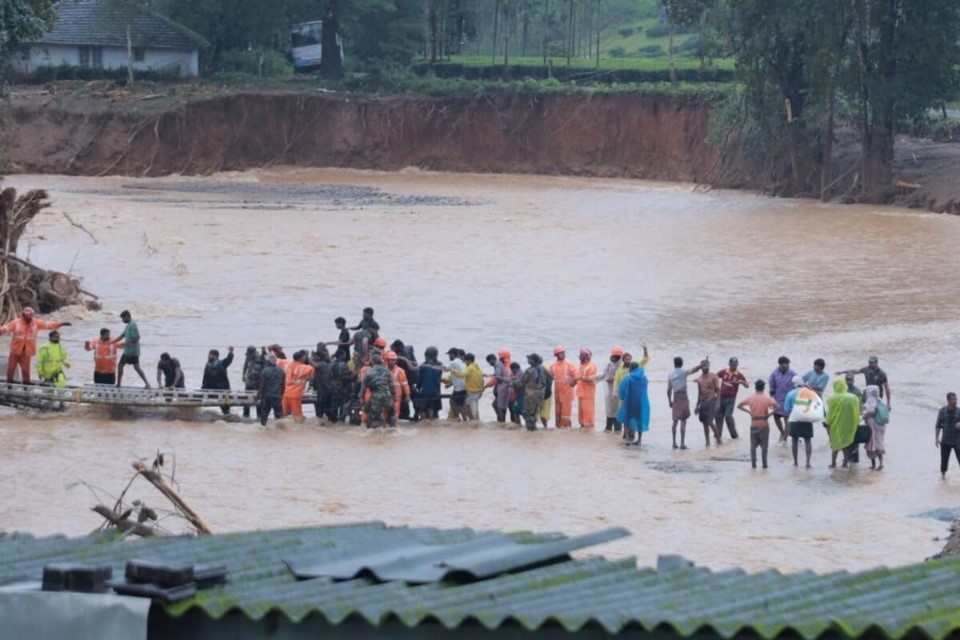
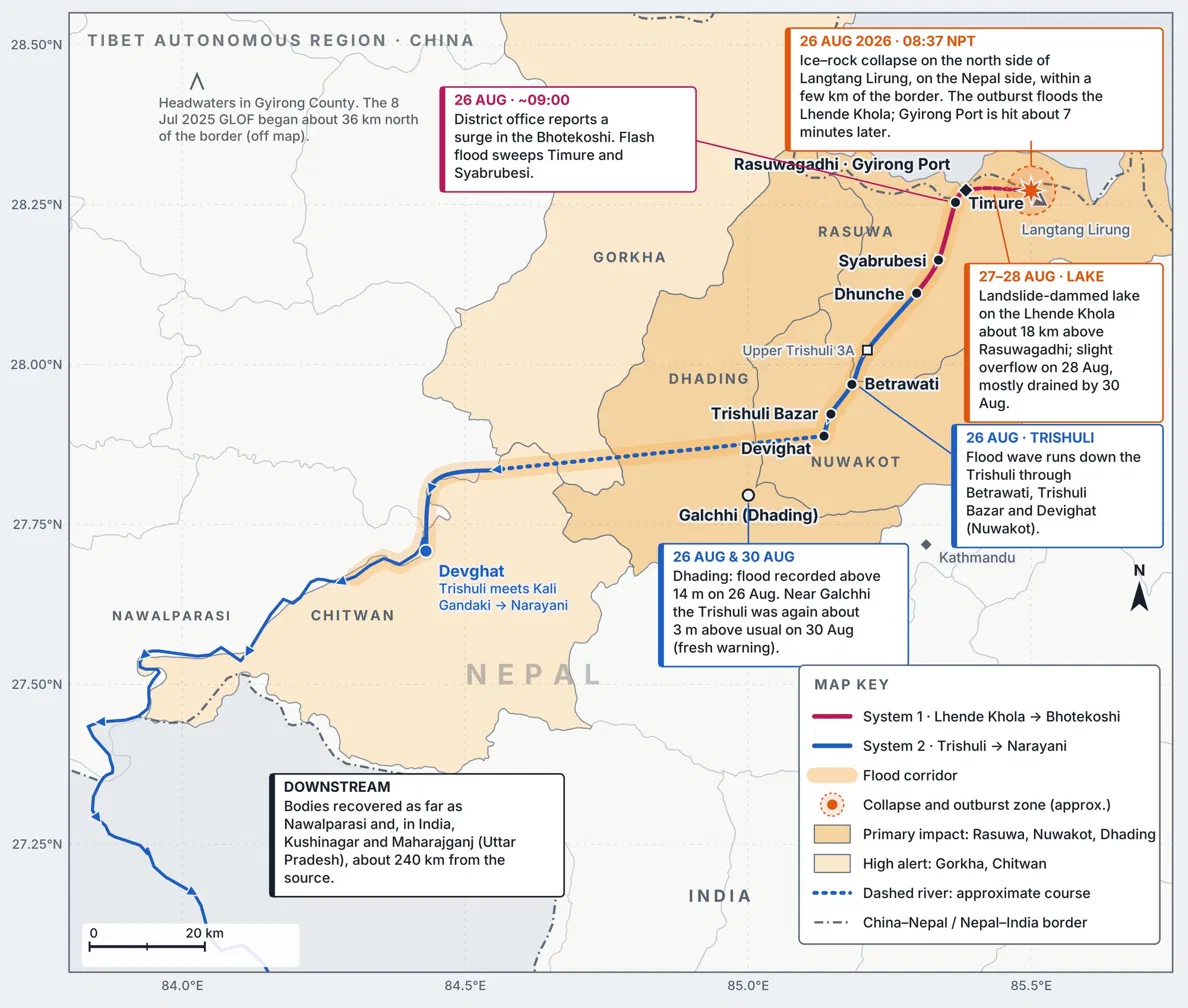
On 26 August, a massive section of ice and rock broke away from the Langtang Lirung peak in the Himalayas, sending a debris-laden flood into Gyirong County on the Chinese side of the Nepal–China border. The wave destroyed Gyirong Port, a major Chinese border crossing and Belt and Road-linked trade hub, along with its customs buildings, a bridge, roads, telecommunications towers and power lines, and cut the area off from the outside world for days. As reported by Reuters and Chinese state media, China's official toll in Gyirong County stands at 16 dead and several hundred missing, including more than 260 foreign nationals, and Beijing has since restricted entry to the border zone. The same glacier collapse sent floodwater downstream into Nepal, where the confirmed death toll has climbed past a thousand, with thousands more still missing. However, Tibetan rights groups, cited by The Guardian and Radio Free Asia, argue that the figures may understate the true scale of the loss inside Tibet as well, given the tight controls on independent reporting from the region. What triggered the collapse, what does the disaster reveal about development choices on the border, how has the Chinese state responded, what lessons are being drawn, and how is Beijing framing the event?
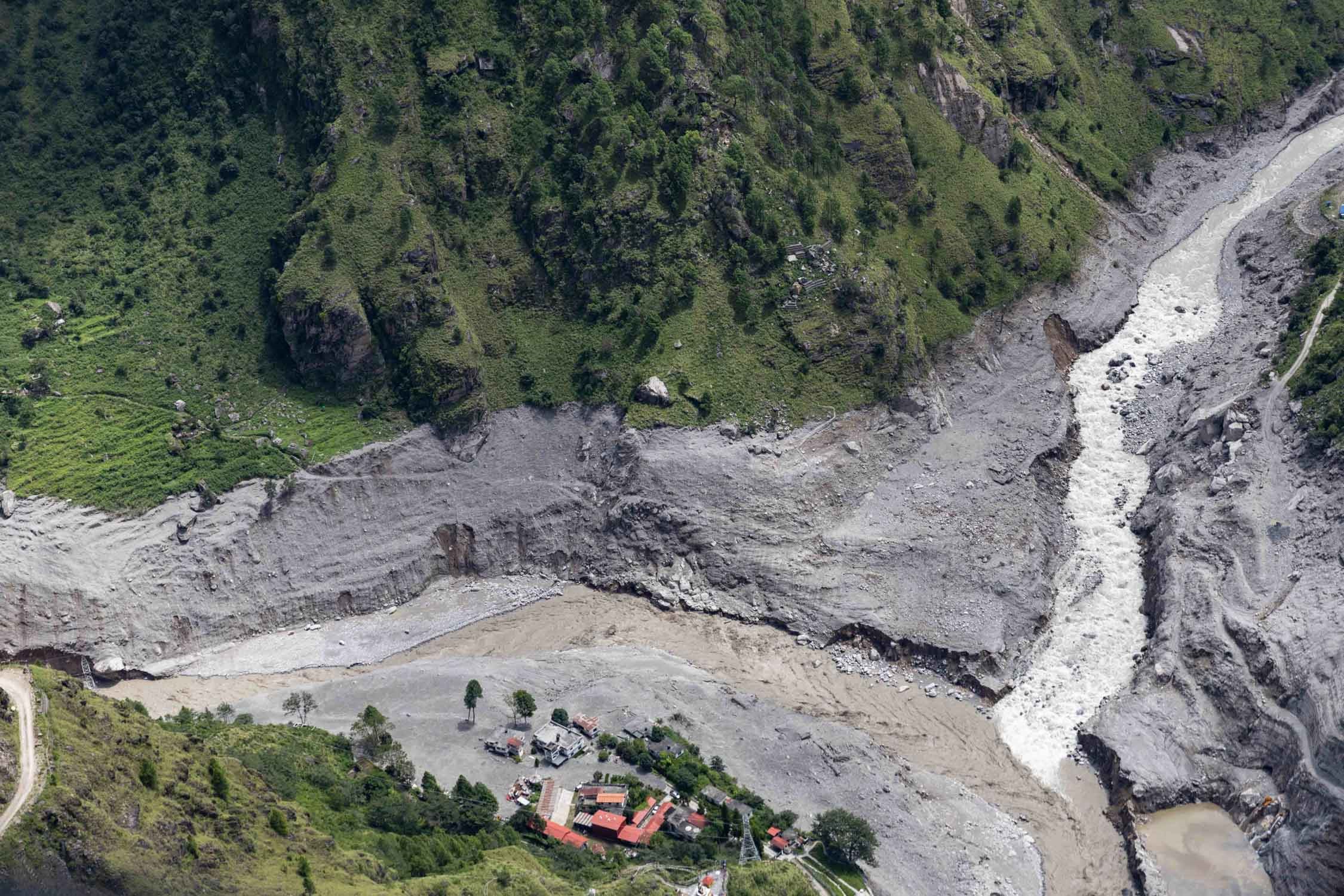
What caused the glacier to collapse, and how did the flood reach the border? Chinese and Nepali scientists broadly agree on the mechanism, even if the deeper cause is still being studied. A high-altitude glacier on Langtang Lirung broke away, fell roughly 4,000 feet, and pulverised rock and ice into a fast-moving avalanche that dammed a river before bursting through as a flood. Experts from the Chinese Academy of Sciences, quoted in Chinese and international coverage, have described it as a "complex multi-hazard cascade" an ice-rock avalanche, debris flow and river-blockage in sequence rather than a single, simple glacial-lake outburst. Whether the initial break was set off by a seismic tremor, prolonged high-altitude warming, or slow accumulated instability in the ice remains unresolved.
Why was a major border crossing rebuilt on ground already known to be hazardous?
Gyirong Port was a significant Chinese infrastructure investment, handling hundreds of millions of dollars in annual trade with Nepal and serving as a gateway for Kailash pilgrimage tourism. It had already been damaged and closed for repairs after a similar, smaller flood roughly fourteen months earlier. Its continued operation on largely the same site, before the underlying glacial and landslide hazards were fully assessed or mitigated, has drawn scrutiny from hazard specialists and Chinese commentators alike Chinese Digital Times has noted that online discussion of "site selection" and the recurrence of geological disasters near the port briefly trended on Chinese social media before fading from the country's trending-topics lists.
What has Beijing's rescue and relief effort looked like on the ground?
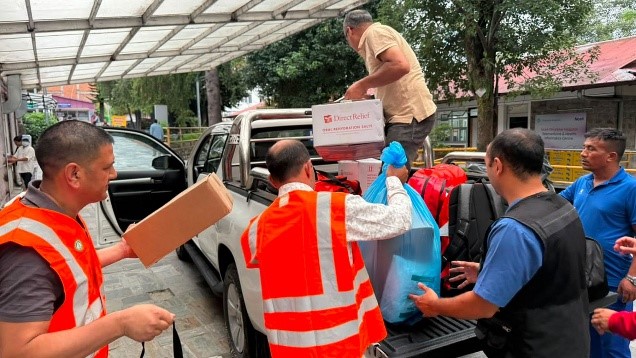
Beijing moved quickly at the political level: President Xi Jinping ordered an "all-out" rescue effort and chaired a Politburo meeting on the disaster, and Premier Li Qiang visited the affected area. On the ground, China deployed hundreds of firefighters, rescue dogs, drones and military aircraft, evacuated more than a thousand tourists and residents, and built an emergency road corridor to reach the cut-off crossing. Rescue work was twice suspended over the risk of a secondary breach from an unstable barrier lake upstream, then resumed once engineers judged the risk manageable. China also sent USD 2 million in emergency relief to Nepal and coordinated the rescue of its own nationals stranded across the border. Even so, the harder, longer task clearing debris, rebuilding the port, and restoring normal life to Gyirong County is still under way well over a week on.
Could this recurrence have been anticipated, and what is it forcing both governments to reconsider?
The recurrence of destructive flooding at the same crossing within about a year has raised pointed questions about whether existing glacial and landslide monitoring in the Himalayas is adequate, and whether an earlier warning system could have reduced casualties on both sides of the border. Both Chinese and Nepali officials have pointed to climate change as a contributing factor, noting that Himalayan glaciers are melting and destabilising faster than in previous decades, and have called for joint China–Nepal monitoring and information-sharing to anticipate future cascades.
How does Beijing's official account of the disaster hold up against competing versions of events?
Beijing's official line, delivered through the foreign ministry and state broadcaster CCTV, is that the flood was a climate-driven natural disaster rather than a preventable infrastructure or governance failure; Chinese experts have attributed it to accelerating glacial melt on the Tibetan Plateau under global warming. China's embassy in Kathmandu has firmly pushed back on alternative accounts, rejecting Nepali suggestions that a dam collapse on the Chinese side caused the disaster or that China failed to give adequate warning, dismissing such claims as "fake news" and stating that "accusation helps nothing, cooperation saves lives." Beijing has also called "malicious speculation" any suggestion that its hydropower projects in the region contributed to the flood. Nepal's government has broadly converged on the same climate-change explanation, though it has separately used the disaster to press wealthier, higher-emitting nations for climate support.
References
"At flood-destroyed border, China teams scour ruins of once-busy port," Reuters, 06 September 2026
https://www.reuters.com/world/china/flood-destroyed-china-nepal-border-no-sign-once-busy-port-reuters-witnesses-2026-09-06/
"China’s silence after Tibet flooding," Taipei Times, 02 September 2026
https://www.taipeitimes.com/News/editorials/archives/2026/09/02/2003863523
"China tightens control in disaster-hit regions in Tibet," Tibet Times, 05 September 2026
https://en.tibettimes.net/2026/09/05/china-tightens-control-in-disaster-hit-regions-in-tibet/
"China is concealing scale of flood disaster, say Tibet campaigners," The Guardian, 31 August 2026
https://www.theguardian.com/world/2026/aug/31/china-concealing-scale-nepal-flood-disaster-say-tibet-campaigners
"China echoes Nepal PM's climate change claim, says glacier collapse triggered floods," Firstpost, 03 September 2026
https://www.firstpost.com/world/china-echoes-nepal-pm-shahs-climate-change-claim-says-glacier-collapse-triggered-floods-14042995.html
"Satellite imagery shows extensive damage from Nepal-Tibet border floods," Radio Free Asia, 27 August 2026
https://rfa.org/english/tibet/2026/08/27/tibet-nepal-flood-landslide-blackout/
"Floods in Nepal and Tibet: restrictions and disinformation are impeding vital news," Reporters Without Borders (RSF), 02 September 2026
https://rsf.org/en/floods-nepal-and-tibet-restrictions-and-disinformation-are-impeding-vital-news
"China Rejects Criticism Linking Tibet Hydropower Projects To Nepal Flash Flood," Deccan Chronicle, 31 August 2026
https://www.deccanchronicle.com/world/china-rejects-criticism-linking-tibet-hydropower-projects-to-nepal-flash-flood-1983763
"'Accusation Helps Nothing': China Rejects Nepal's Flood Trigger Claim As Rescue Operations Continue," Free Press Journal, 27 August 2026
https://www.freepressjournal.in/viral/accusation-helps-nothing-china-rejects-nepals-flood-trigger-claim-as-rescue-operations-continue-after-himalayan-disaster
"Flood Wipes Away Chinese 'Belt and Road' Border Port in Nepal," The Maritime Executive, 27 August 2026
https://maritime-executive.com/article/flood-wipes-away-chinese-belt-and-road-border-port-in-nepal
"Nepal Floods: PM Warns Climate Change Is Increasing Himalayan Risks," Business Today, 02 September 2026
https://www.businesstoday.com.my/2026/09/02/nepal-floods-pm-warns-climate-change-is-increasing-himalayan-risks/
"Information Controls Follow Catastrophic Flooding in Gyirong on the China-Nepal Border," China Digital Times, 02 September 2026
https://chinadigitaltimes.net/2026/09/information-controls-follow-catastrophic-flooding-in-gyirong-on-the-china-nepal-border/
About the author
Priyanka Makhijani Postgraduate student, Department of Public Policy, Ramaiah University of Applied science.