The 2026 Nepal Floods: Lessons from India's Wayanad landslides on climate anomalies and disaster preparedness
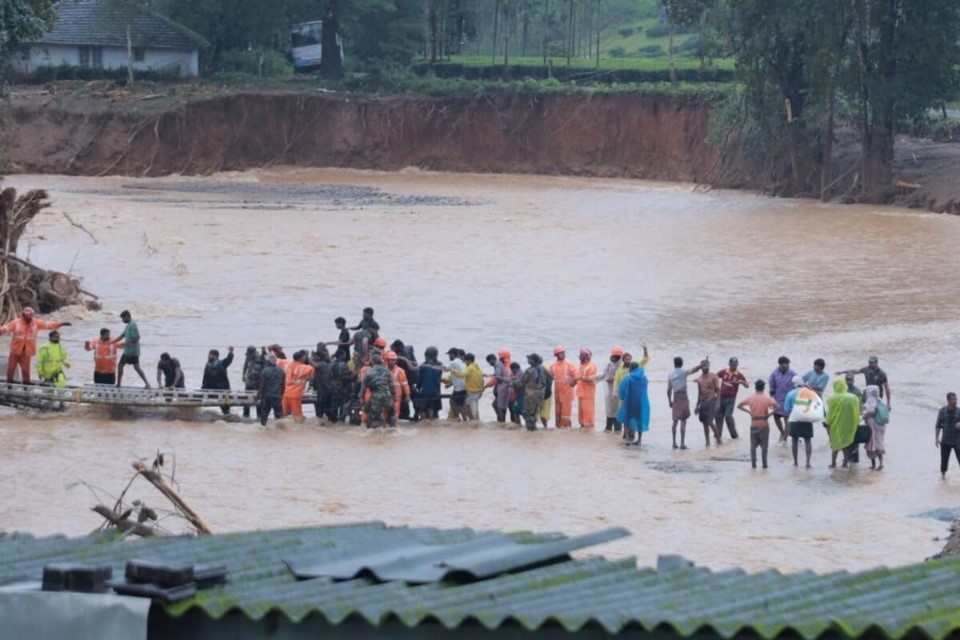
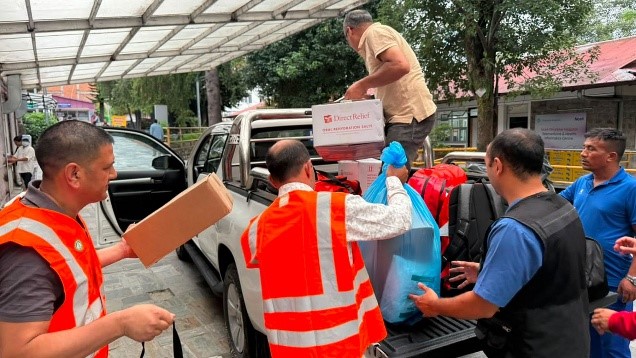
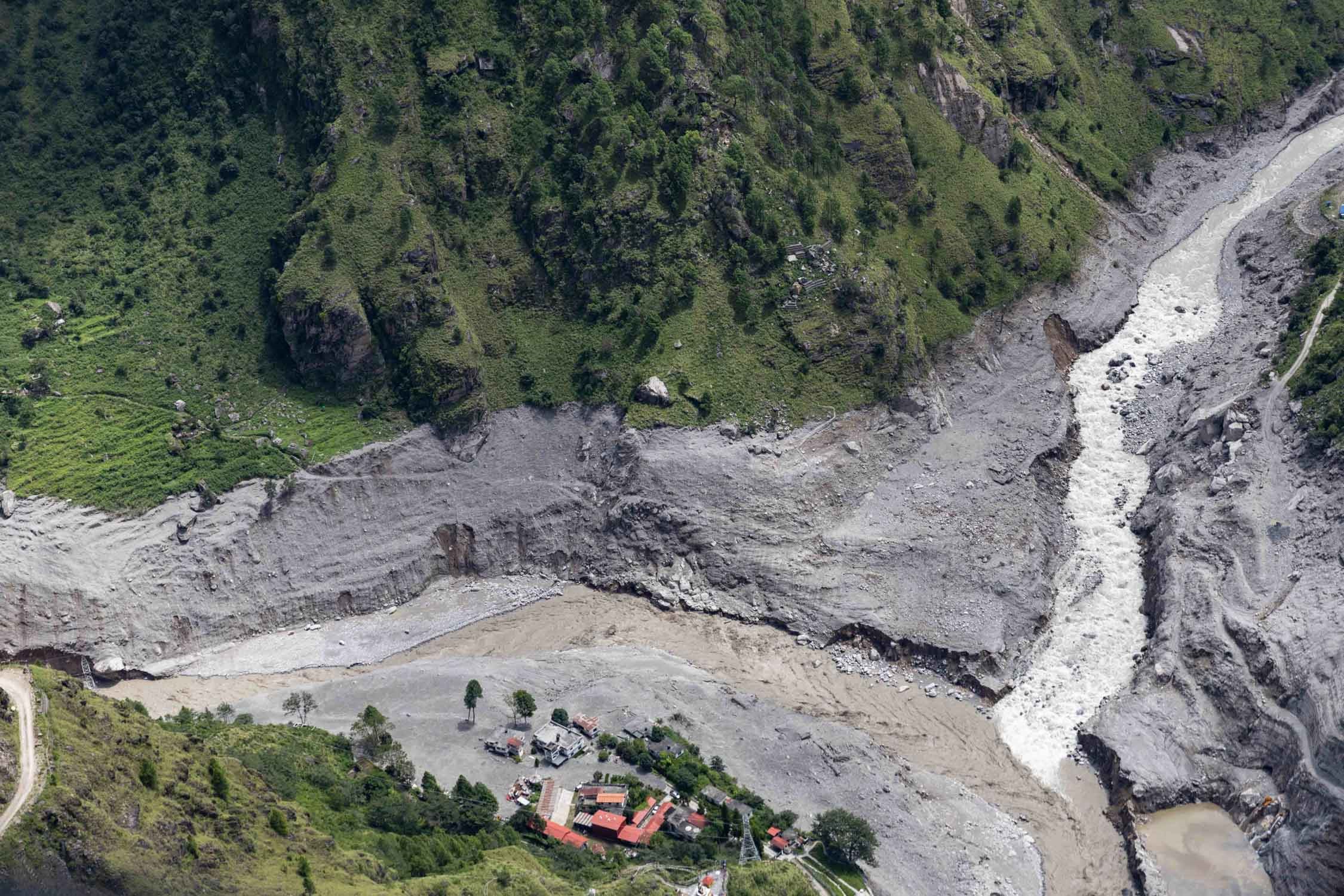
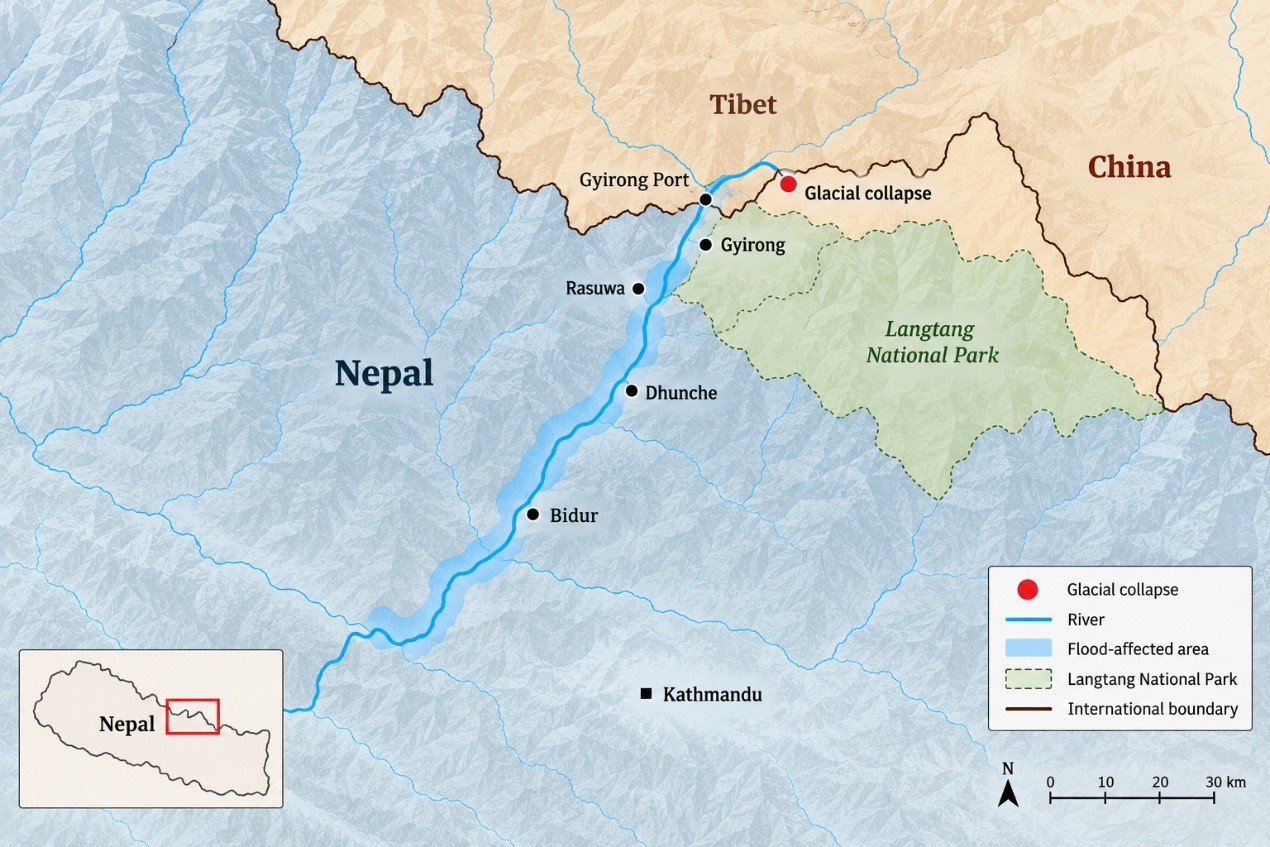
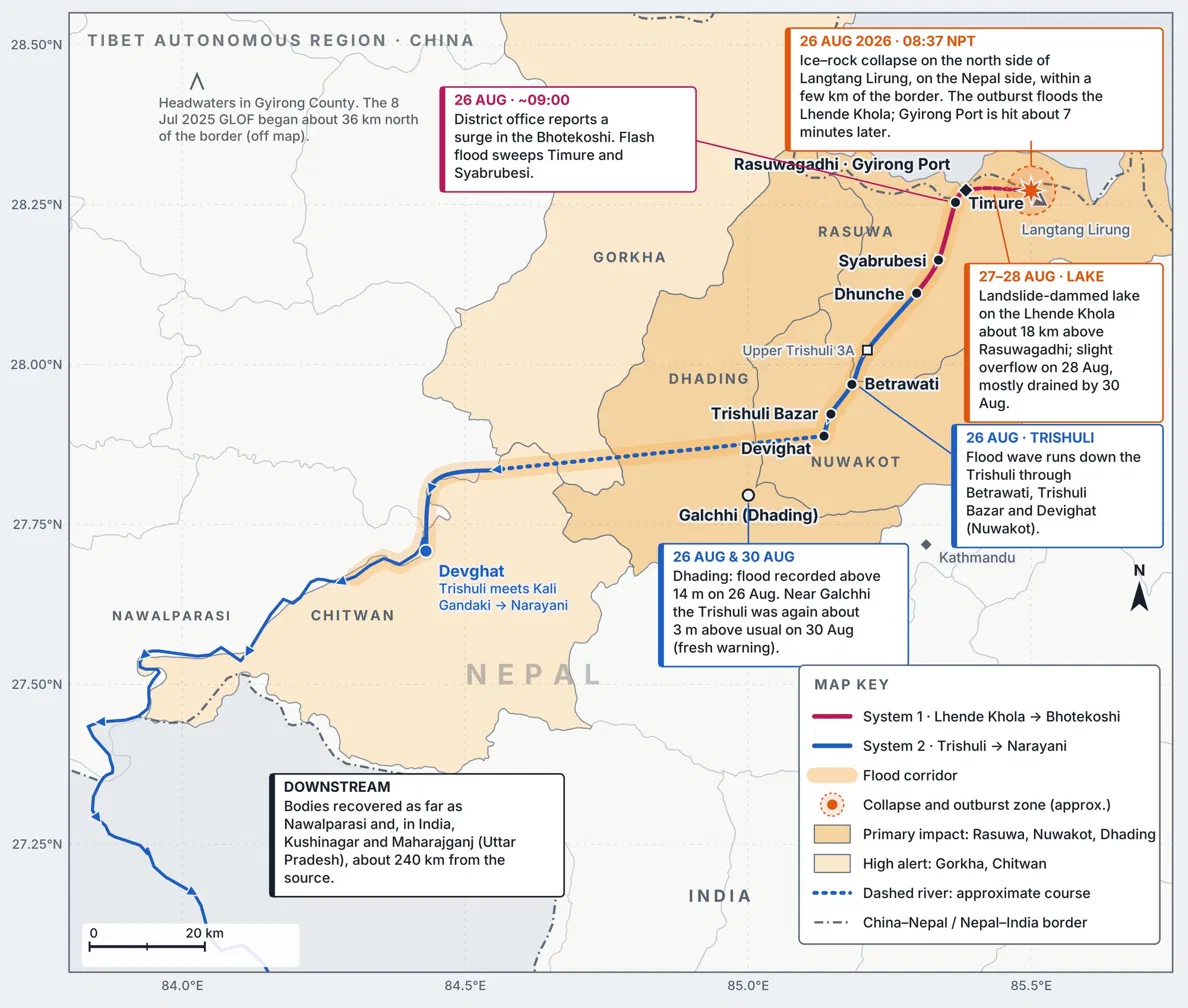
On 26 August, a glacial collapse in the Langtang Himal Region of northern Nepal, adjoining the Tibet Autonomous Region of China triggered catastrophic flash floods and landslides, causing a 5.2 magnitude seismic event. The disaster unfolded in less than an hour; flash floods drove a massive deluge of water, ice and rock debris into Nepal’s Bhotekoshi River system, continuing for about 100 kilometres, tearing through the districts of Rasuwa, Nuwakot and Dhading. On the Chinese side the same event triggered a devastating mudslide at Gyirong, a major Nepal-China trading port, cutting off a critical trade and transit route between the two countries. The human toll of the floods stands at a devastating 1,355 deaths, with over 5,000 people still missing.
Just over two years earlier, on 30 July 2024, a similarly catastrophic landslide had taken over the Mundakkai and Chooralmala villages in Wayanad, along India’s Western Ghats, triggered by a cloudburst. Weeks of relentless rainfall had oversaturated the soil on the steep slopes of Mundakkai, and gave way to several successive landslides that travelled a path of nearly eight kilometres. The catastrophe claimed over 200 lives and displaced hundreds of people, marking one of the deadliest disasters in the state’s history
Where do the two catastrophes converge and diverge?
The similarities in the geological makeup of both Wayanad and the Himalayas end largely in the fact that they are high-altitude mountainous regions. The same can be observed in the immediate triggers of both catastrophes. The 2024 Wayanad landslides were a repeated instance of slope failure triggered by a cloudburst. Days of sustained monsoon rained over four to five times the capacity of what the soil could absorb and retain; 572 millimetres of rain over just 48 hours. Landslides are endemic to the Western Ghats, where deforestation, slope-cutting for construction and other activities have weakened the soil, increasing the region's susceptibility to landslides.
The Bhotekoshi floods, on the other hand, is a result of a rarer phenomenon of structural failure of a glacier body and its underlying bedrock, possibly due to the degradation of permafrost that destabilised the bedrock. It is distinguished from a conventional glacial lake outburst flood (GLOF) that the region is familiar with.
Although neither disaster can be tucked away neatly under the blanket explanation of anthropogenic climate change, several climate-change induced triggers can be identified in Wayanad and Bhotekoshi. In Wayanad, the increasing frequency of intense bursts of short spells of rain (unlike the consistent monsoons), have been associated with the warming of the Arabian Sea and shifting monsoon dynamics. In parallel, the accelerated loss of glacial mass and the thawing of permafrost in the Himalayas due to rising global temperatures are well documented.
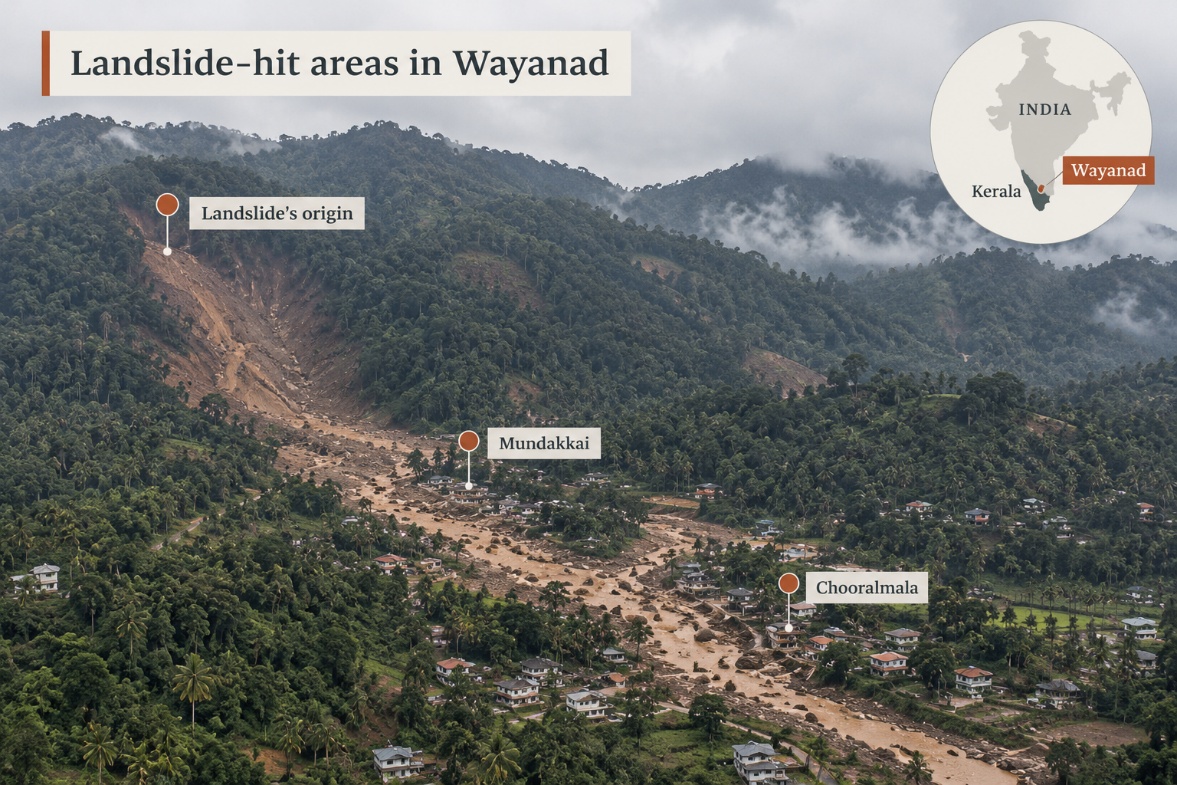
Source: AI Generated
Disaster preparedness and early warning systems: A comparison of contexts
The early warning architecture in Wayanad rested primarily on the Indian Meteorological Department’s (IMD) tiered, colour-coded rainfall alert system of yellow, orange and red alerts. The alerts are issued at a district scale and escalated according to forecasts of rainfall intensity. Other alert mechanisms include rain gauges are situated across the region, but they require manual monitoring and additional data before the official authorities can issue warnings based on their readings.
Nepal’s disaster warning systems float on a network of hydrological river gauges operated by the Department of Hydrology and Meteorology (DHM), including a station at Syabrubesi, designed to detect the kind of gradual river-level rise associated with conventional monsoon flooding or slow-forming GLOF events. This meant that the glacial collapse was an outlier, and the system was unprepared to detect the mud flow as it was not triggered by intense rainfall. Moreover, the destruction of roads, bridges, health facilities and communication infrastructure rapidly isolated affected settlements, making evacuation, rescue and relief difficult even after the disaster began.
Limitations of warning systems and lessons learned
The limitations in disaster preparedness in both contexts extended to the dissemination of warnings and evacuation processes. In Wayanad, despite the lack of region-specific warning systems rendered the district level orange alert largely nominal. The inadequate monitoring of the rain water gauges, and bureaucratic delays also failed the effective dissemination of warnings and the relocation of people before the landslides struck.
In Nepal, the peak flow was below the Amber warning threshold, even though it had already killed hundreds upstream. Further, the affected districts were only under a Code Orange alert in the government's bulletin, but such warnings are issued routinely during monsoon season and are often treated as a matter of course. The dearth of a chain of command in the event of such disasters was also pronounced. In both contexts, the routine warnings of intense rainfalls, or imminent floods, with the usual non-occurrence of disasters had also diminished the people’s perception of risk.
Both disasters reiterate the need for mechanisms to monitor slow-building geological and climatic precursors in terrains already known to be fragile. In Wayanad, the IMD's district-level alert system, however accurate, could not substitute the need for localised region-specific measures to interpret local conditions in real time. Rain gauges and threshold-based alerts are only as useful as the public's ability to read and act on them.
This need becomes even more pronounced when the hazard is an anomaly outside the historical pattern a monitoring system was designed for, as both a monsoon cloudburst in Wayanad and the glacier-and-bedrock collapse in Rasuwa demonstrates. This demands sustained investment in geological and climatological research needed to navigate the newly emerging risk profiles of climate sensitive regions.
Conclusion
Despite the differing geological and causative factors underlying the Bhotekoshi floods and the 2024 Wayanad landslides, both disasters indicate the growing susceptibility of climate-sensitive regions to climate catastrophes and anomalies. The manifestations of gradual climate change and environmental degradation prove to be more complex, unpredictable and difficult to accommodate within existing disaster frameworks. There is also a growing need to develop new systems and approaches for understanding climate change-induced disasters, assessing emerging risks, strengthening preparedness and rethinking existing response mechanisms, demanding a renewed approach to understanding and addressing climate-induced disasters.
References
“Glacier collapse caused Nepal’s deadly flash flood — a sign of things to come?” Nature, 27 August 2026
https://www.nature.com/articles/d41586-026-02716-w
“Time to move beyond basic disaster response,” The Kathmandu Post, 10 September 2026
https://kathmandupost.com/columns/2026/09/08/time-to-move-past-the-basics-in-disaster-response
“During Nepal floods, decentralized, community-based warning saved lives,” United Nations Office for Disaster Risk Reduction, 03 September 2026
https://www.preventionweb.net/news/during-nepal-floods-decentralized-community-based-warning-saved-lives
“Report on Wayanad Landslide 2024,” Institute of Land and Disaster Management Kerala, 23 April 2025
https://ildm.kerala.gov.in/wp-content/uploads/2025/04/Report-on-wayanad-landslide-1.pdf
K A Shaji, “Wayanad landslides: Climate change, district’s decimation in the name of development reasons for monumental tragedy, say experts,” Down to Earth, 30 July 2024
https://www.downtoearth.org.in/natural-disasters/wayanad-landsides-climate-change-districts-decimation-in-the-name-of-development-reasons-for-monumental-tragedy-say-experts
K A Shaji, “Wayanad’s Hume Centre for Ecology & Wildlife, which warned of landslides, urges separate weather warning system for Kerala’s Western Ghats region,” Down to Earth, 01 August 2024
https://www.downtoearth.org.in/natural-disasters/wayanads-hume-centre-for-ecology-wildlife-which-warned-of-landslides-urges-separate-weather-warning-system-for-keralas-western-ghats-region
About the author
Brighty Ann Sarah is a Research Assistant at the National Institute of Advanced Studies, Bengaluru.