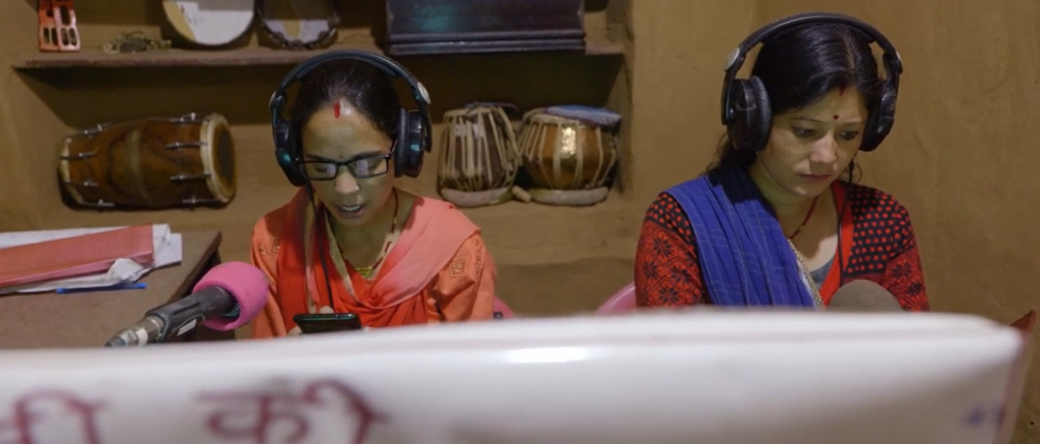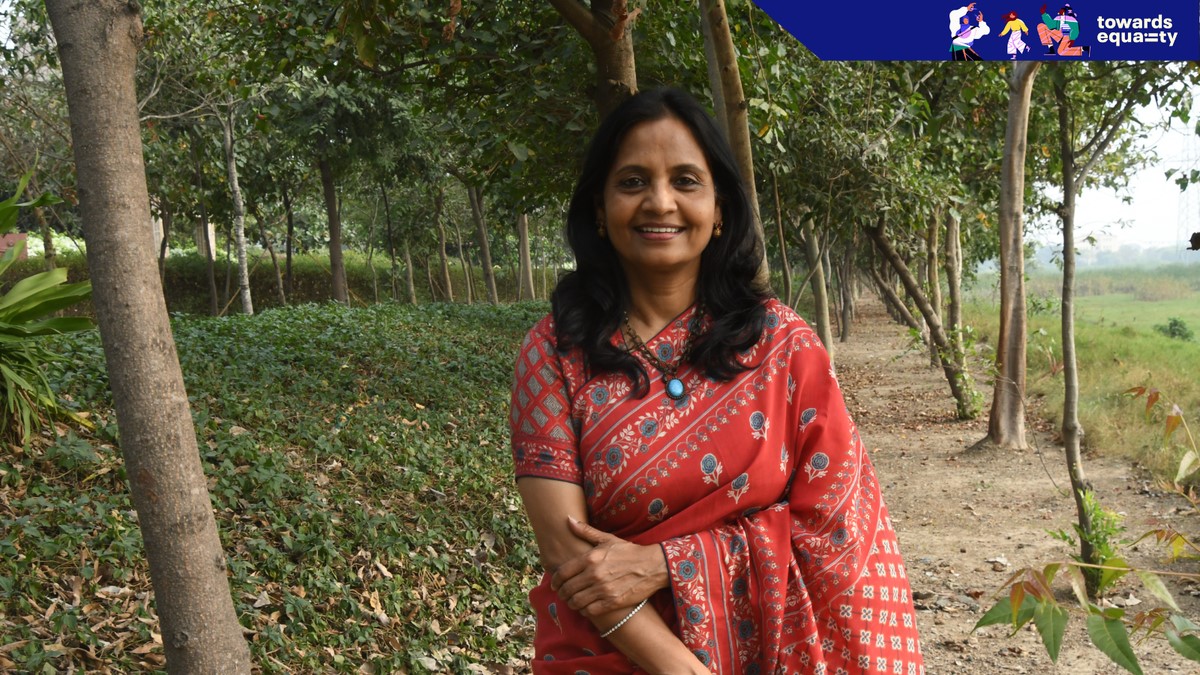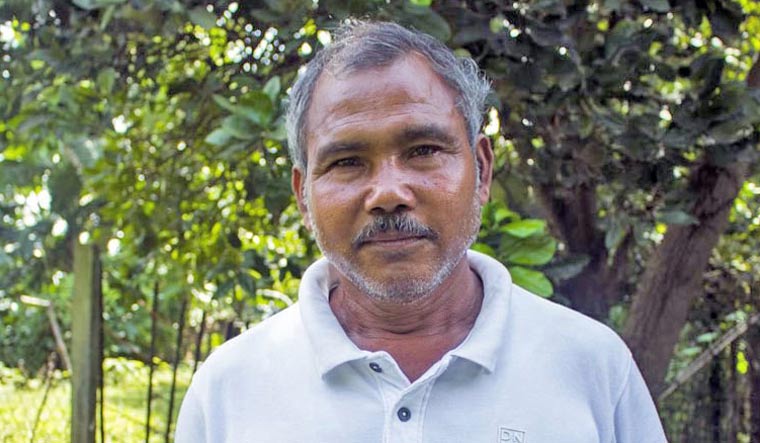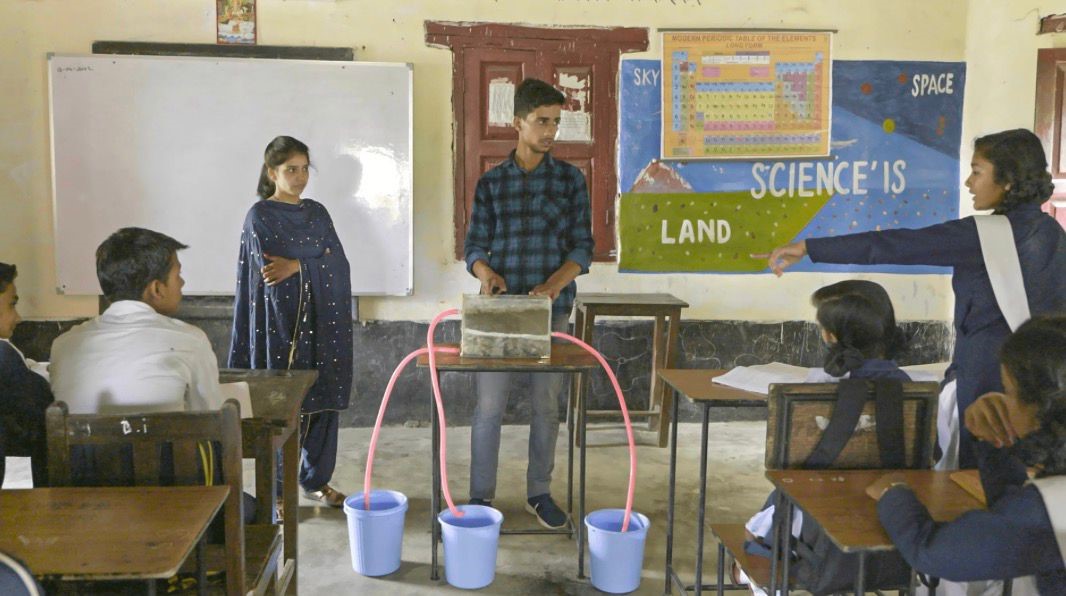
Heera Sammal and Chandan Bhatta from the remote village of Suda in Uttarakhand, India, are youth climate advocates who are demystifying complex science into climate action. They have gained recognition by CEEW as ‘young water scientists’ and are spearheading spring conservation efforts in the region. Since Suda is located in a hilly region, the village relies primarily on natural
springs for freshwater access. Over the years, changing rainfall patterns and increasingly intense, short spells of rain has severely affected groundwater recharge in the region. Uttarakhand has recorded nearly a 50% increase in days with extremely heavy rainfall since the 1970s, with rain now falling in concentrated bursts that lead to rapid surface runoff and flash floods rather than gradual absorption into the ground. As a result, underground aquifers and natural springs have steadily dried up, affecting water availability and local livelihoods.
(PICTURECREDIT: - CEEW https://youtu.be/nVXKdCPRRVM?si=lzleX5HcFBAQbblS )
Working alongside the rural development organisation ‘Chirag’, Heera and Chandan have been restoring Suda village’s aquifers and natural springs through community led conservation efforts. Their work focuses on reviving and adapting traditional practices that enhance the water retention capacity of nature based assets that are integral to them. They led local teams in digging 500 litre percolation pits that slow down runoff and allow rainwater to seep into the ground. They also developed larger 1000 litre recharge pits built using a structure of 60% rocks at the base and 40% soil above, designed to direct water deeper into underground aquifers. Alongside these interventions, both Heera and Chandan serve as Key Resource Persons (KRP) in the village, tracking spring discharge rates, organising afforestation drives and help managing Water User Committees within the community.
(PICTURECREDIT: - CEEW https://youtu.be/nVXKdCPRRVM?si=lzleX5HcFBAQbblS)
Their interventions have significantly improved groundwater recharge and spring discharge levels in Suda. Springs that initially discharged only 2-3 litres of water per minute now discharge nearly 8-10 litres per minute, improving water availability even during dry summer periods. Increased water security has also supported agriculture and livestock rearing in the village, while helping reduce pressures of outward migration linked to declining water access. Their work has also strengthened collective participation around water management within the community through the formation of Water User Committees and shared conservation efforts.
References: -
- CEEW Council on Energy, Environment and Water. (n.d.). How students are leading spring conservation in Uttarakhand. Faces of Climate Resilience. CEEW. https://www.ceew.in/how-students-are-leading-spring-conservation-uttarakhand-climate-change-story
- Council on Energy, Environment and Water. (n.d.). [Video] YouTube. https://youtu.be/nVXKdCPRRVM?si=lzleX5HcFBAQbblS
About the Author
Namrata L Ghanghatkar is a post-graduate student at the Department of Public Policy, School of Social Science, Ramaiah University, Bengaluru